
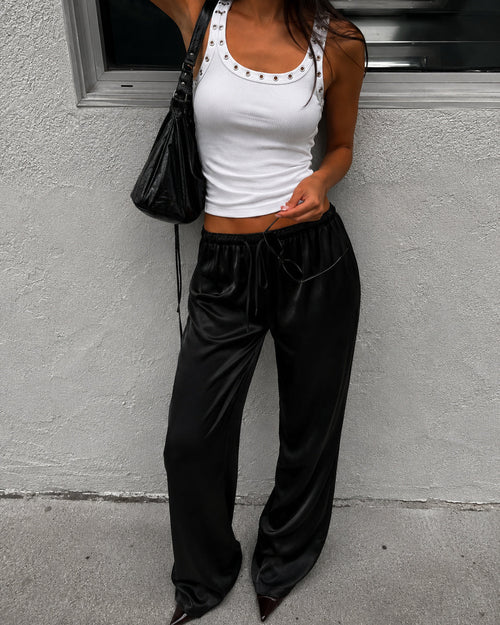

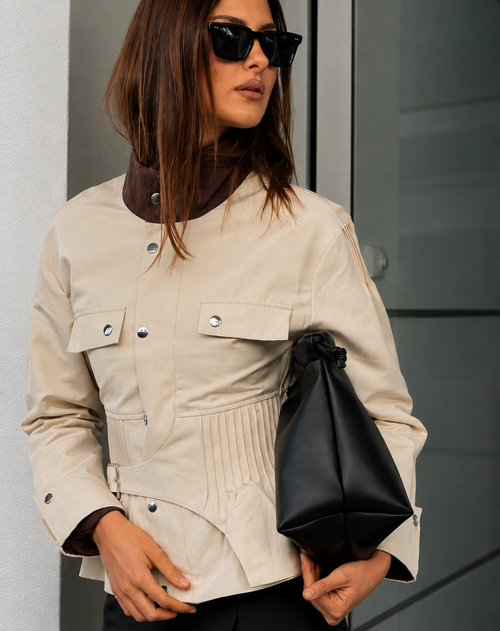






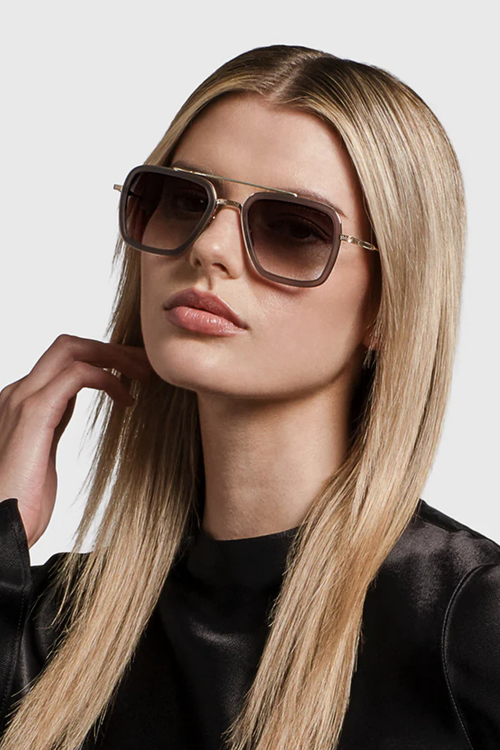
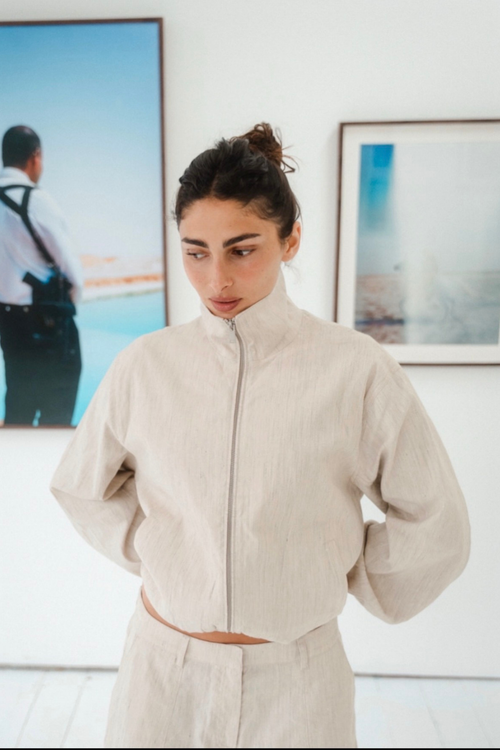






There is a moment in the fitting room that happens with a cowl neck dress and almost nothing else. The woman puts it on, looks at herself, and her shoulders drop about an inch. It is the drape doing it - the way a soft fold at the neckline pulls the eye up and lets everything below it move.
A cowl neck dress is the most quietly flattering silhouette in a wardrobe, and also the one most often bought badly. The difference between a cowl that looks like liquid and a cowl that looks like a mistake comes down to three things: the cut of the fabric, what you wear underneath, and whether you have understood that the neckline is the entire outfit. Here is what we have learned selling them from Bondi.
What actually makes a cowl neck work
A cowl is a length of fabric cut on the bias and allowed to fall. That is the whole technique, and it is why the fabric matters more here than in any other silhouette.
Bias-cut cloth stretches diagonally, which is what lets it curve around the body instead of hanging flat. Get it right and the fold sits softly at the collarbone and holds its shape all evening. Get it wrong - too stiff, cut on the straight grain, or too light to have any weight - and the cowl either stands away from the chest like a bib or collapses into a crumple by the second hour.
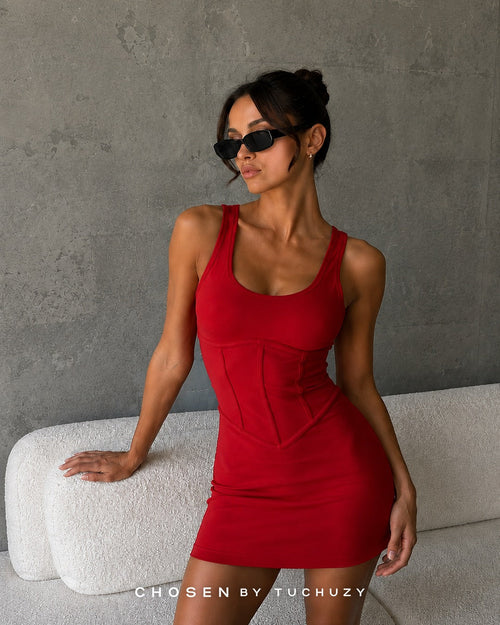
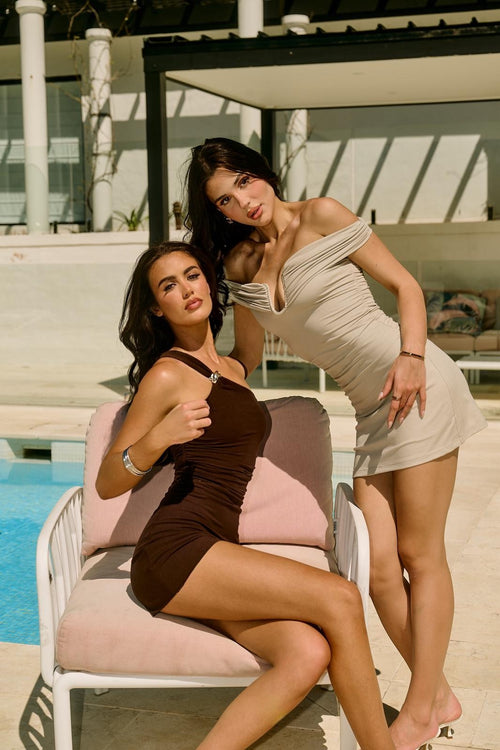
Satin and crepe are the two fabrics that do this best. Satin gives you shine and a heavier fall. Crepe gives you a matte, more structured drape that reads slightly more considered. The Cowl Satin Mini Dress from our in-house label is the satin version we point people to first - the weight is right, so the fold holds rather than flutters. Both sit within the Chosen by Tuchuzy dresses edit.
The underwear question, answered properly
This is where most cowl neck dresses come unstuck, and nobody wants to be the one to say it out loud.
A cowl sits away from the body by design. Anything structured underneath - a moulded cup, a visible band, a strap crossing the shoulder - fights the drape and makes the fold look like it is covering something rather than falling naturally. The options that work are a stick-on cup, a bralette soft enough to move with the fabric, or nothing at all.
If none of those feel right, choose a cowl with a higher fold or a built-in support panel rather than trying to solve it with the wrong bra. A lace neckline like the Lace Cowl Mini Dress in Sorbet sits differently again - the lace gives the drape a little more body, so there is less movement to manage across an evening.
The second thing to check in the mirror before you commit: sit down. A cowl behaves completely differently seated, and a dress that is perfect standing can open considerably at a table.
Mini, midi or maxi
The neckline is the statement, so the length is really a question of where you are going.
Mini. The most common cowl format and the most flattering proportion for the silhouette - the drape at the top and a shorter hem balance each other. This is the going-out version. Browse the mini dresses edit for the full range.
Midi. The most useful of the three, because it moves between an occasion and a dinner without changing register. A Chilli Twist Midi Dress works on the same principle even where the drape sits lower - a twist or a cowl through the body gives a midi something to say. See more across midi dresses.
Maxi. The most dramatic, and the one that needs the most fabric weight to work. A bias-cut maxi with a cowl neck is essentially an evening dress, and it should be treated as one. The Aisha Jade x Chosen Reversible Maxi Dress in Slate and Pumice is the version worth knowing about because it is reversible - two necklines, one dress, which is unusually good value in a category where most pieces get worn twice a year. The wider maxi dresses range is worth a look alongside it.
Styling it: the three ways that always work
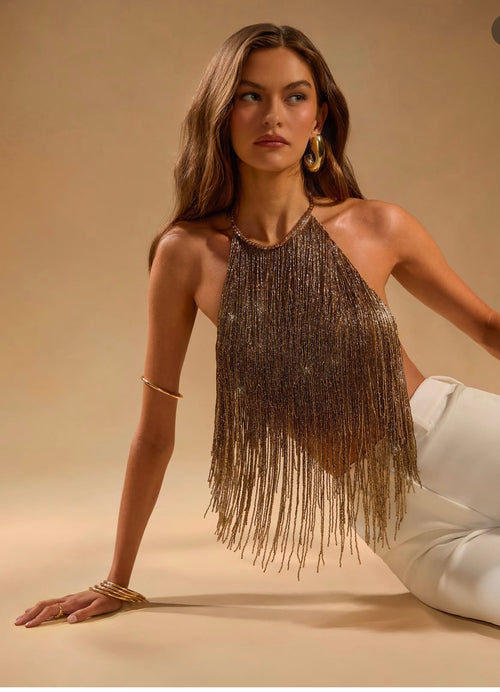
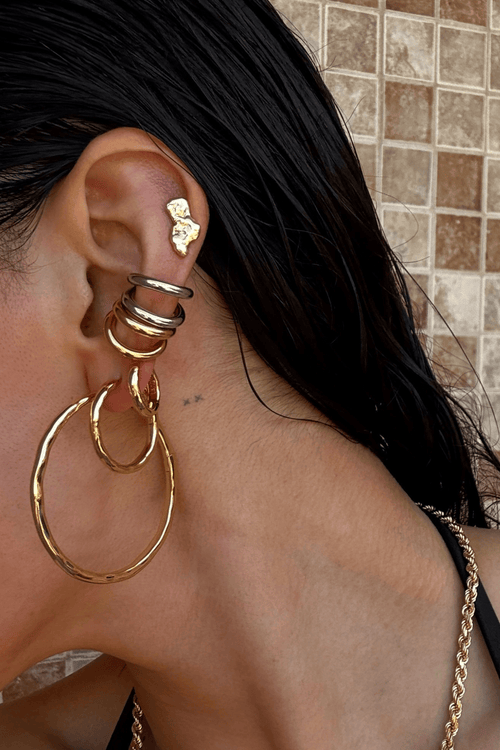
Bare, with one piece of jewellery. The cowl already occupies the neckline, so a necklace competes with it rather than adding to it. Leave the neck alone and put the interest in an earring - something sculptural and gold from the designer jewellery edit. This is the version that photographs best and the one we style in-store most often.
Under a blazer. The most underrated cowl outfit. A sharp shoulder above a soft fold is a genuinely good contrast, and it takes a going-out dress into dinner, an event or even a work function depending on the length. Keep the blazer open and let the drape show - buttoned up, the whole point is lost. The blazers edit has the cuts that layer cleanly without adding bulk at the shoulder.
With flat leather, not a heel. The instinct with a satin cowl is a stiletto, and it is often the wrong call. A flat sandal or a low mule undercuts the shine and makes the dress read as something you wear rather than something you are dressed in. Save the heel for the maxi.
Colour, and what the drape does to it
A cowl catches light in folds, which means colour behaves differently than it does on a flat surface. Satin in a mid-tone will read two or three shades lighter in the fold and darker in the shadow, so a single-colour dress ends up with visible tonal movement. This is why satin cowls in soft colours photograph so well and why deep jewel tones look expensive.
Black satin is the exception that always works, but it is also the least forgiving of poor construction - every ripple shows. If you are buying black, buy the better-made one.
For something quieter, the Draped Sash Mini Dress in Sky shows what the technique does in a pale tone, where the drape reads as texture rather than shine.
Where the cowl neck came from
The cowl is one of the oldest ideas in dressmaking - drapery hung from the shoulder is essentially how clothing worked in the ancient Mediterranean, and the fold at the neck was structural before it was decorative. Its modern life began in the nineteen thirties, when bias cutting made it possible to build the drape into a fitted dress rather than a loose one. That is the version we still wear: the soft neckline of classical drapery on a body-skimming silhouette.
It has never really left, which is the strongest argument for buying one properly. This is not a shape that will look dated in three years. Our thinking on that is set out in how to build a wardrobe that actually lasts, and the cowl neck dress is a textbook example of the principle.
Caring for it
Satin and crepe both want to be washed cold and dried flat. Never wring a bias-cut piece - the diagonal stretch means it will not return to shape. Hang it on a padded hanger or fold it; a wire hanger will leave a permanent shoulder mark in satin within a week.
If it creases, steam rather than press. An iron flattens the fold you paid for.
Your questions answered
What bra do I wear with a cowl neck dress?
Ideally none, or a stick-on cup. A soft bralette can work if the cowl sits high. A structured bra with a visible band will always fight the drape - if you need that level of support, choose a dress with a built-in panel instead.
Is a cowl neck flattering on a fuller bust?
Yes, and often more so than a straight neckline, because the fold creates a soft diagonal that lengthens rather than cuts across. The thing to check is the depth of the drape - a very low cowl needs more support than a shallow one, so look for a higher fold or an adjustable strap.
Can I wear a necklace with a cowl neck?
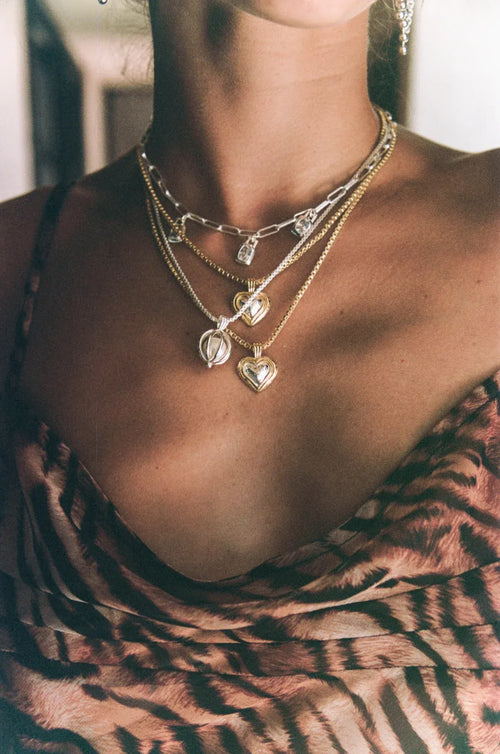
We would not. The neckline is already doing the work, and a chain tends to disappear into the fold or sit awkwardly on top of it. Put the jewellery in your ears.
Is a satin cowl too dressy for daytime?
Not with the right shoe. A satin mini with a flat leather sandal and a denim jacket is a Saturday outfit. The fabric only reads formal when the rest of the look agrees with it.
How do I stop the cowl from gaping when I sit?
Check it in the fitting room seated, not standing. If it opens more than you are comfortable with, either size down through the bodice or choose a style with a fixed fold rather than a free-falling one. A small hidden stitch at the deepest point of the drape is also a completely legitimate fix and takes a tailor two minutes.
Browse the full designer dresses edit, or start with the in-house Chosen by Tuchuzy label where most of our cowl silhouettes live. Tuchuzy has been curating from Bondi Beach since 1995 and ships worldwide, including express delivery to the United States.