

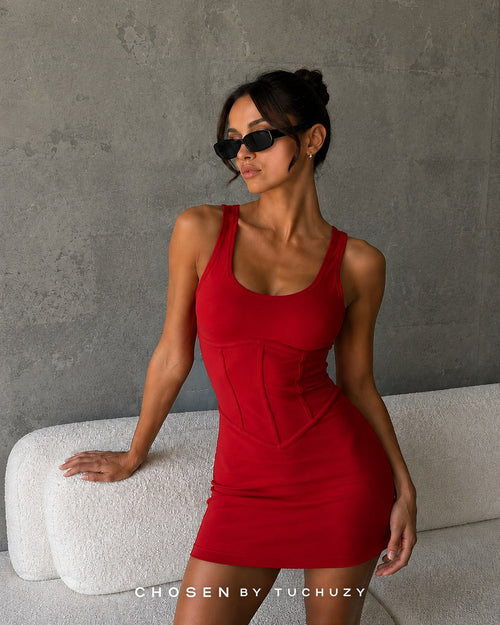


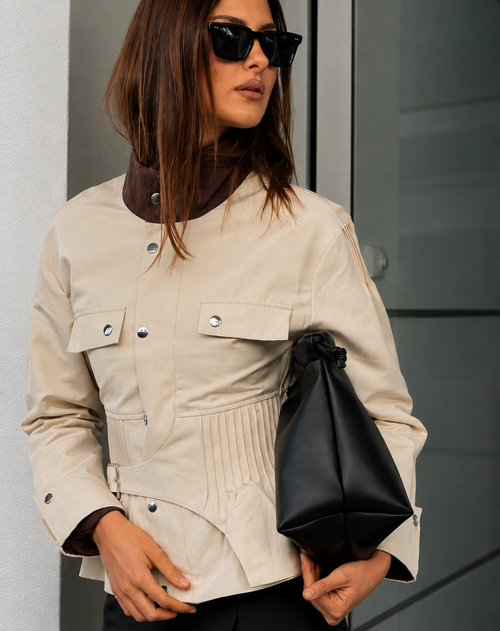
























There is a moment that happens almost every day on the shop floor in Bondi. A woman picks up a pair of sunglasses she has seen a hundred times online, puts them on, looks in the mirror, and something is off. She cannot name it. The frame is beautiful. It is simply not beautiful on her.
Nine times out of ten the answer is proportion, not taste. Sunglasses are the only thing you wear directly on your face, which means they are held to a standard no jacket or jean has to meet. Get the shape right and the frame disappears into you. Get it wrong and it wears you instead.
Below is the way we actually talk women through frames in store: not a rulebook, but a working method built on thirty years of watching people try things on. Our full sunglasses edit sits behind every recommendation here, and because eyewear moves in single pieces rather than size runs, the individual frames named below rotate quickly - the collection is always the current picture.
Start with contrast, not category
Forget for a moment whether your face is oval or heart-shaped. The single most useful principle in eyewear is contrast: a frame flatters when its lines run counter to the lines of the face.
Softer, rounder faces are lifted by a frame with structure and angle. Angular faces with a strong jaw or high cheekbones are softened by curves and rounded edges. It is the same logic that makes a straight-leg jean sit beautifully on a curved hip, or a soft knit balance a sharp tailored trouser. Balance is the whole game.
The second principle is width. The frame should be roughly as wide as the widest part of your face, and no wider. A frame that overshoots your temples makes the face look smaller and slightly lost; one that pinches inside them makes it look broader. When a woman tells us a pair felt wrong but she cannot say why, this is almost always the reason.
Round and soft-featured faces: bring the structure
If your face is roughly as wide as it is long, with a soft jawline and full cheeks, you want a frame that introduces line and edge. Squared and rectangular shapes, angular aviators, and anything with a defined top bar will do the lifting.
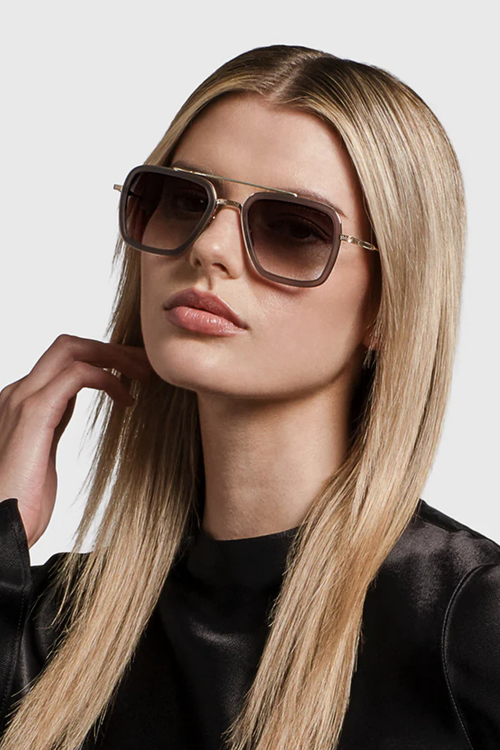
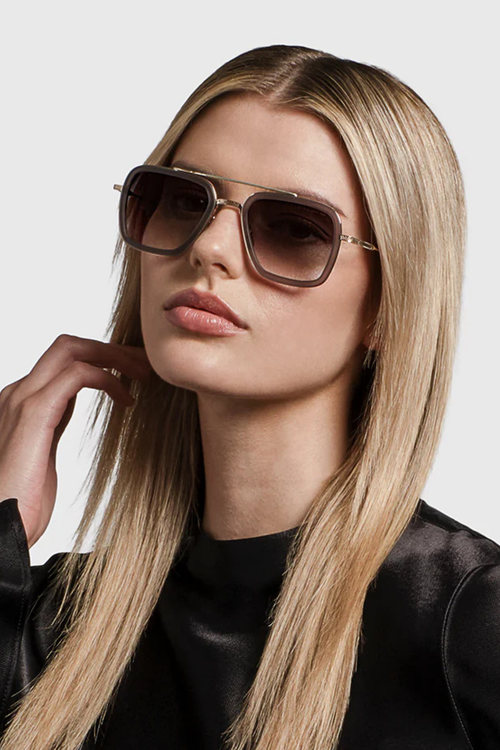
The squared aviator is the shape we reach for constantly here - a flat brow line carves a definite horizontal across the face, and the result is instant architecture. Styles such as the Dita Flight 006 in Root Beer with Antique White Gold, or the same silhouette in Grey and Black for something more discreet, are the reference point; both sit in the designer sunglasses edit and rotate as they sell.
Avoid small round frames here. They echo what is already there, and the face reads flatter than it is.
Angular and strong-boned faces: bring the curve
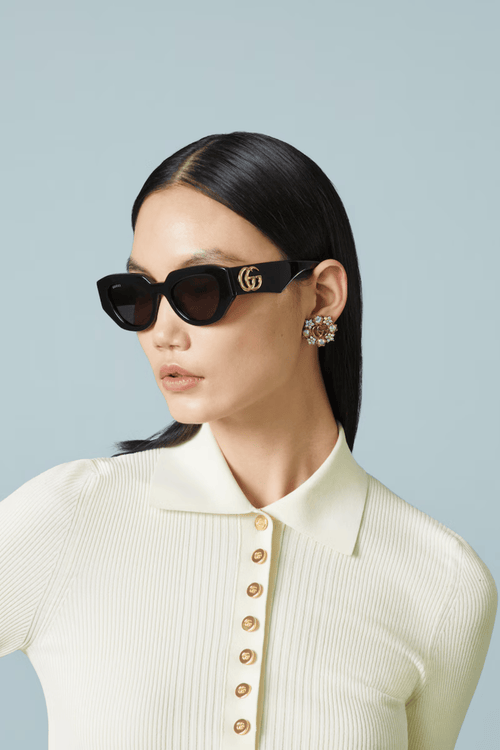
A square jaw, a defined chin, high hard cheekbones. This is a face that photographs magnificently and can be over-sharpened by the wrong frame. Rounded and softly curved shapes, lighter metal rims, and gently oversized silhouettes bring things back into balance.
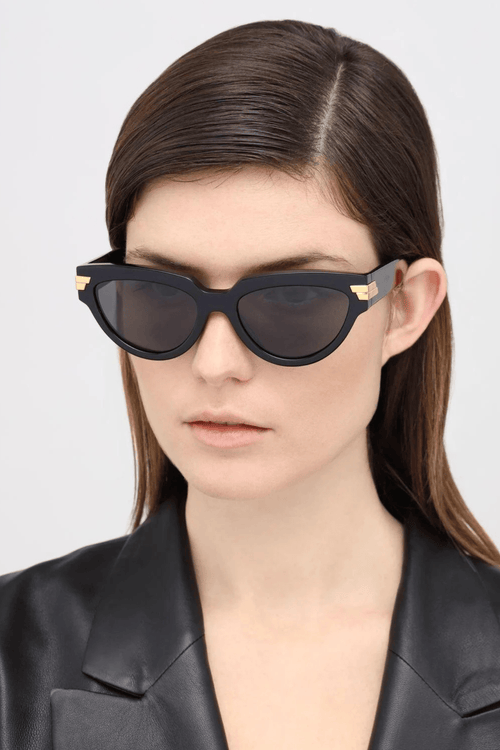
A clear crystal rim in a quietly rounded shape softens without going anywhere near cute: it takes the edge off a strong bone structure while still reading as a serious pair of sunglasses. Black acetate with softened corners does the same work, which is why the Bottega Veneta frames flatter far more faces than a hard-cornered black frame ever does. The Le Specs edit is worth a look for the same principle at a lighter weight.
Long and oval faces: mind the depth
An oval face is often described as the one that suits everything, which is technically true and practically unhelpful. If your face is noticeably longer than it is wide, the variable that matters is not shape but depth: the vertical height of the lens.
A shallow, narrow frame stretches a long face further. A deeper lens, or a slightly oversized shape, breaks the vertical and brings it back into proportion. This is where the bigger, more generous frames earn their keep - look for the oversized silhouettes within the sunglasses collection, and consider the graphic black-metal styles if you want the same depth in a colder register.
If you have a longer face and have always defaulted to small frames because big ones felt like too much, this is the swap worth making. It is usually the day people stop apologising for their sunglasses.
Colour, metal and the things nobody tells you
Two quiet details decide whether a frame becomes the pair you never take off.
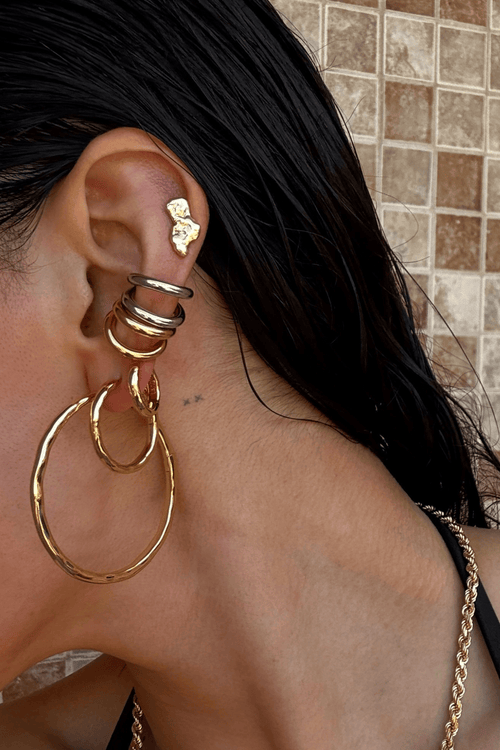
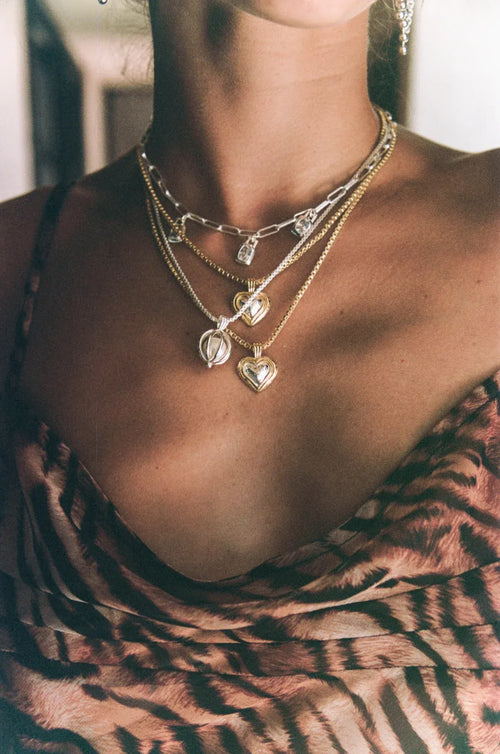
The first is metal tone, and it should follow your jewellery rather than fight it. If you live in gold, a yellow-gold or antique-gold rim will look like it belongs to you. If your stack is silver, go cooler: rhodium, titanium, brushed steel. Try frames beside your own jewellery, not in isolation, and the choice usually makes itself in about four seconds. The wider accessories edit is where the two categories sit together.
The second is weight. A frame you love and never wear is a frame that is too heavy, sits badly on the bridge, or slides every time you look down. In Bondi that matters more than most places, because sunglasses here are not an accessory you put on for an occasion. They go on at the door and come off at night. Titanium and lighter acetates earn their price over years, not seasons.
How they actually get worn
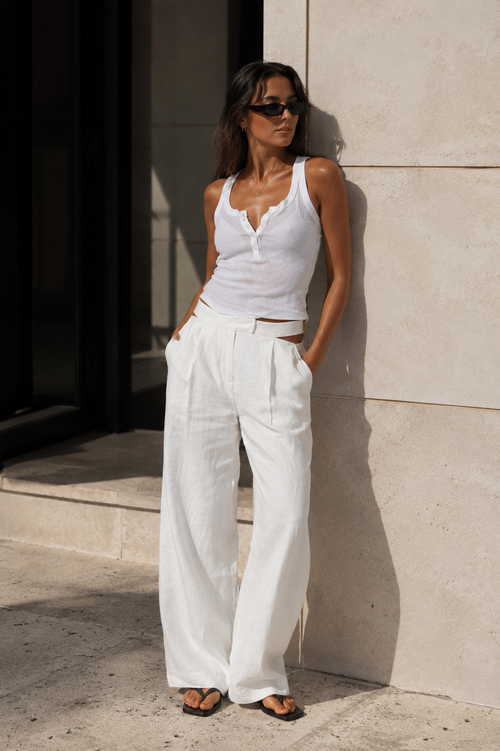
The test we always suggest is this: imagine the frame with the three outfits you wear most, not the one you wear least. For most of our customers that is a tee and a pair of jeans, something linen, and swimwear with a shirt thrown over the top.
A softly rounded black frame disappears into all three, which is why it is the most repurchased shape in the shop. A squared gold aviator is a stronger statement and lives best with denim and neutral tops, where it becomes the focal point. Clear and crystal rims come alive against tan and white linen, which is precisely why they sell fastest in January.
Buy the frame that suits the life, not the outfit you have in your head. The other one always ends up in the drawer.
Your questions answered
How do I work out my face shape without overthinking it?
Look in the mirror and ask two questions only. Is my face longer than it is wide, or roughly equal? And is my jaw soft or defined? Those two answers get you to the right frame family. Everything past that is preference.
Are oversized sunglasses still worth buying?
Yes, if the width is right. Oversized became a problem only when the frames overshot the temples. A generous lens depth with a width that stops at the edge of your face is flattering on almost everyone, particularly longer faces.
Gold or silver frames?
Match your jewellery, not your outfit. Your rings and earrings are on your body every day; a frame that clashes with them will always look slightly borrowed.
Is it worth spending this much on sunglasses?
Only if you wear them daily, which most people in a coastal city do. The difference at this level is the lens quality, the hinge, and the weight distribution, all of which are things you feel after four hours rather than four minutes. A frame you actually wear for five years costs less per wear than three you abandon.
Can I try frames on before I buy?
Please do. Frames are the one category where the mirror beats the screen every time. Visit us in Bondi Beach and try the whole wall. If you are not in Sydney, we ship worldwide, including to the United States.
Thirty years in, the advice has not changed much. Find the frame that argues gently with your face, sits light on your nose, and matches the gold or silver you already wear. Then stop looking.