










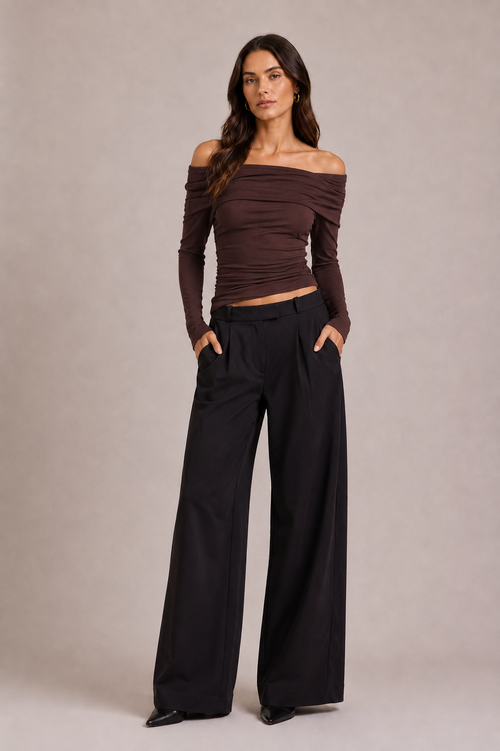





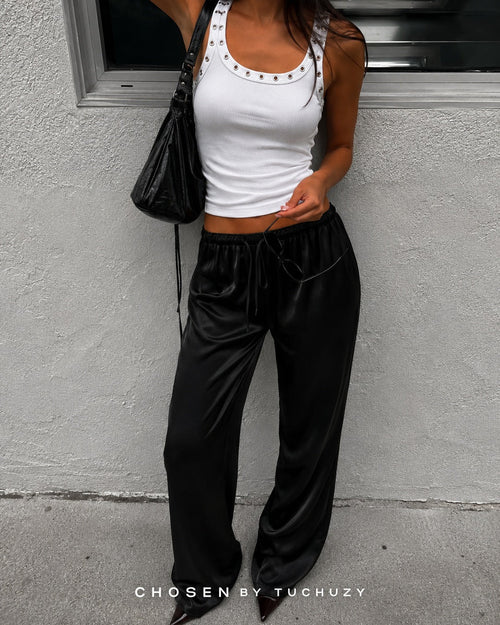


















The most sustainable garment in your wardrobe is the one you already own - kept beautiful for another five years. We have spent three decades in Bondi selling clothes made to last, and the conversation we have most often across the counter is not about what to buy next but how to look after what came home last season. Knowing how to care for your clothes is the unglamorous half of slow fashion, and it is where a considered wardrobe either compounds in value or quietly falls apart. The good news is that proper care is mostly a matter of doing less: washing less often, at lower temperatures, with more air and less machine. This guide covers the categories we get asked about most - denim, knitwear, swimwear and linen - with the habits that keep each one at its best.
The First Rule: Wash Less, Wash Cold
Most clothes are washed far more often than they need to be, and every unnecessary cycle costs fabric its colour, shape and surface. Unless a piece is visibly soiled or has genuinely earned a wash, airing it overnight is usually enough - hang it somewhere breezy and let it recover. When something does go in the machine, cold water and a gentle cycle protect both the garment and its dye, and a simple wash bag keeps delicate knits and lace from tangling with zips and hardware. Skip the dryer as a default: the Australian climate is one long free drying rack, and line-drying in shade is the single kindest thing you can do for almost everything you own. Dark pieces and prints dry inside-out to protect their colour from direct sun.
Reading Care Labels Without a Decoder Ring
The label sewn into a side seam is the manufacturer telling you exactly how to keep the piece alive, and it rewards thirty seconds of attention. The number in the wash tub symbol is the maximum temperature, not a target - lower is almost always kinder. A hand in the tub means exactly that: cool water, gentle movement, no wringing. A crossed-out square means the dryer is off the table, and a circle points to professional cleaning - worth honouring for structured, tailored and heavily embellished pieces, where the construction inside the garment matters as much as the fabric outside it. When a label offers a range of options, take the gentlest one as your default. And when in doubt with a piece you love, wash it the way you would want to be woken up: cool, gently, and not too often.
Denim: The Less-Is-More Category
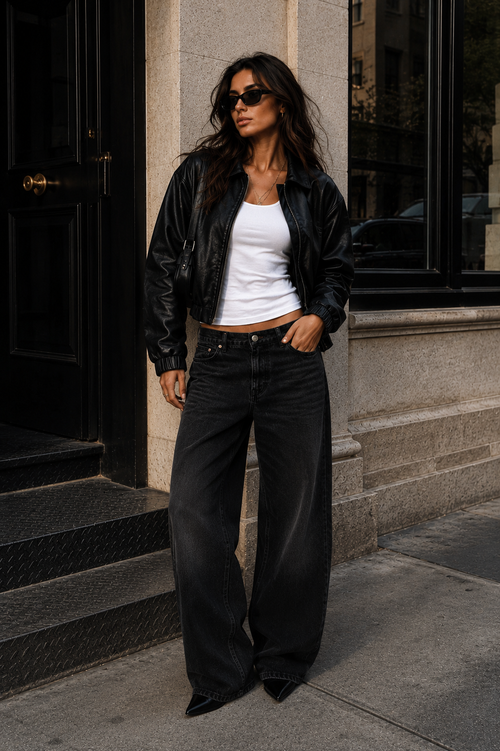
Good denim is built to be worn hard and washed rarely - that is how it moulds to you, and it is why vintage jeans look the way they do. Spot-clean marks with a damp cloth, air jeans between wears, and when a proper wash is finally due, turn them inside out, use cold water, and let them line-dry; a tumble dryer is where denim goes to shrink and fade before its time. The rigid and vintage-inspired cuts in our womens denim edit reward this patience visibly, developing character where fast denim just develops wear. Labels like AGOLDE and RE/DONE - both cut with that vintage lens - are exactly the kind of jeans this approach was made for, and the same habits apply across the whole womens jeans wall.
Knitwear: Fold, Rest, De-Pill
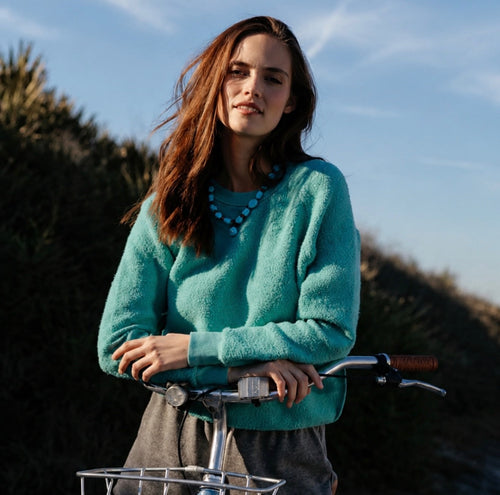
Knitwear asks for three things: never hang it, never wring it, and give it days off. Hangers stretch shoulders out of shape - fold knits flat on a shelf instead. Wash rarely and by hand or on a wool cycle, cold, then press the water out gently in a towel and dry flat, reshaped, away from direct heat. Pilling is not a defect but a fact of soft fibre; a proper de-pilling comb or cashmere stone lifts the bobbles off in minutes and returns a jumper to new. Resting matters too - a knit worn two days running holds odour and loses loft, while one rotated through a small collection keeps its bounce for years. The pieces in our womens knitwear edit are chosen for fibre quality first, and quality fibre repays exactly this kind of minor, consistent attention.
Swimwear: Rinse First, Always
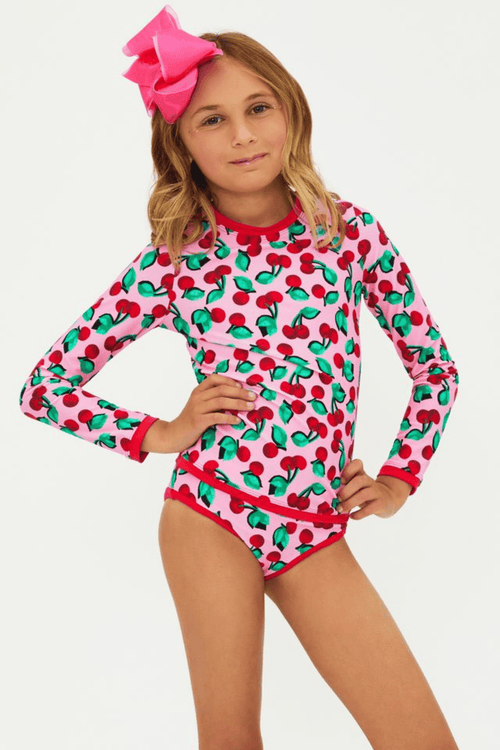
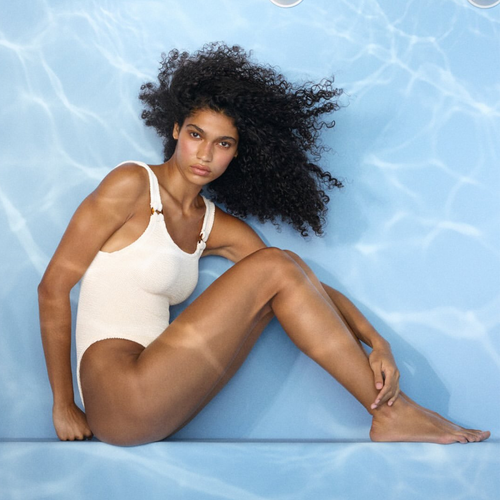
Nothing in the wardrobe works harder than swimwear - salt, chlorine, sunscreen and sun conspire against elastane all summer long. The habit that saves it is a cold fresh-water rinse as soon as possible after every swim, before the salt or chlorine has time to sit in the fibre. Hand-wash gently with a mild detergent when needed, never wring, and always dry flat in shade - direct sun and tumble heat are what turn bright swim dull and loose. Avoid rough surfaces too; pool edges and rock ledges pull threads on delicate weaves. This matters most with textured fabrics like the signature crinkle of Hunza G, whose one-size stretch stays springy for years when rinsed and shade-dried - and the same routine applies to everything in the luxury swimwear collection, from Fae Swim to Montce.
Linen and Natural Fibres: Embrace the Crease
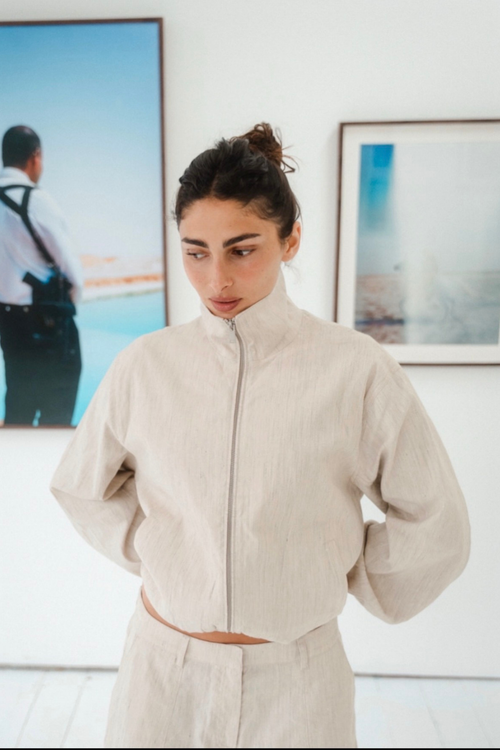
Linen is the most forgiving fabric in the wardrobe once you stop fighting it. It washes well cold or lukewarm, dries quickly on the line, and actually improves with wear - softening a little more each season. The crease is part of the language; press with a warm iron while slightly damp if an occasion calls for crisp, and otherwise let it be. Natural fibres also breathe, which means they need washing less often than synthetics in the first place - another quiet argument for them. Our linen edit and the linen pieces across our in-house Chosen by Tuchuzy label - like the Deconstructed Linen Pant White - are designed with exactly this low-intervention life in mind.
Storage and Repair: The Long Game
Care extends past washing. Give clothes room to breathe in the wardrobe - crushed garments crease and hold odour. Store off-season pieces clean, because moths and stains both set over months of storage. Keep a tiny repair kit and act early: a loose button resewn tonight is a thirty-second job, the same button lost is a hunt. And when a repair is beyond you, a good tailor or cobbler is the most underrated relationship in fashion - the difference between a wardrobe that turns over every two years and one that accrues. Every piece that ships from Tuchuzy - and we ship worldwide, including express to the United States - is chosen with that longer life in mind. If you are ever unsure how a specific piece wants to be treated, visit us in Bondi or write to the team; we would always rather help you keep something than replace it.
Your Questions Answered
How often should I actually wash my jeans? Far less than feels natural - air them between wears, spot-clean marks, and give them a proper cold inside-out wash only when genuinely needed. Raw and rigid denim rewards the longest intervals.
How do I stop my knitwear from pilling? You cannot entirely - pilling is friction plus soft fibre - but washing less, using a wash bag, resting knits between wears and removing pills with a comb or stone keeps them looking new indefinitely.
Why does swimwear lose its stretch? Chlorine, salt and heat degrade elastane. The fix is preventive: rinse in cold fresh water straight after swimming, never tumble-dry, and dry flat in shade rather than pegged in full sun.
Is line-drying really better than the dryer? For almost everything, yes - heat is the fastest way to shrink, fade and fatigue fabric. Shade-drying preserves colour; the dryer is best reserved for towels and sheets.
Do I really need to dry-clean everything that says so? Honour the label on structured, tailored and embellished pieces - the interfacing and construction inside them do not survive home washing. For simple pieces, the gentlest interpretation of the label is usually safe, but when a garment matters to you, follow it exactly.
Does caring for clothes actually make fashion more sustainable? It is arguably the biggest lever an individual has. Extending a garment's active life reduces how often it needs replacing - buying well and caring properly beats buying often, every time.
Updated September 2026: the Deconstructed Linen Pant White linked above has been checked against current stock and remains available. The linen, knitwear and swimwear collections are always the most current view of what these care routines apply to.